

Coral Bay
Coral Coast
Exmouth is the gateway to Ningaloo Reef, a rare fringing reef you can snorkel straight off the beach, world-famous for whale shark swims and backed by the gorges of Cape Range National Park.
Exmouth sits at the tip of the North West Cape, a narrow finger of red rock and spinifex poking north into the Indian Ocean roughly 1,250 kilometres from Perth. It is a small town — a few thousand people, one main shopping strip, a marina and a lot of caravans — and almost nobody comes here for the town itself. They come for what sits a few hundred metres offshore: Ningaloo Reef, the largest fringing coral reef in Australia and, by most measures, the longest in the world, running some 260 kilometres down the coast and lying close enough to the beach in places that you can swim out to living coral without a boat or a jetty. That single fact — a world-class reef you wade into rather than sail out to — is why Exmouth punches so far above its population in the WA tourism conversation.
Our writer Zali spent nine days on the Cape in early April, timing the trip deliberately for the tail end of the coral spawn and the opening fortnight of whale shark season, and came home with her phone full of video shot side-on to something enormous gliding past. She’d been to Coral Bay further south the year before and assumed Exmouth would be a bigger, busier version of the same thing. It isn’t, quite — Exmouth is the whale shark capital and the gateway to Cape Range National Park, with a harder-edged, more working-town feel than Coral Bay’s holiday-park cluster, and a wider spread of things to do once you’re out of the water. Both are worth the trip; this guide is about the Cape.
The Ningaloo coast has been Aboriginal Country for at least 30,000 years, and the shell middens and rock shelters scattered through Cape Range National Park are physical proof of it. The traditional owners here are the Baiyungu, the (West Coastal) Thalanyji and the Yinikutira (also written Yinikurtura or Jinigudira) peoples, whose native title over the broader Gnulli claim area — more than 71,000 square kilometres across the Ashburton, Carnarvon, Exmouth, Upper Gascoyne, Murchison and Shark Bay shires — was determined more than two decades after the original claim was lodged. An Indigenous Land Use Agreement now gives Baiyungu and Thalanyji traditional owners a formal role caring for close to 388,000 hectares of the Ningaloo coast, working alongside the WA Parks and Wildlife Service on the marine park and Cape Range.
The town of Exmouth itself is a Cold War relic, built in 1967 to service the Harold E. Holt Naval Communication Station, a joint Australian–US facility whose thirteen VLF (very low frequency) towers still stand north of town, transmitting to submarines across the Indian and western Pacific Oceans. The central mast, Tower Zero, is 387 metres tall and was for decades the tallest human-made structure in the southern hemisphere; you can see it from most of town, and from the Vlamingh Head Lighthouse lookout it dominates the skyline behind the reef. The lighthouse itself dates to 1912 and sits alongside signage covering a 1907 shipwreck and a 1943 Japanese air raid on the wartime radar station — more layered history than a town this size usually carries.
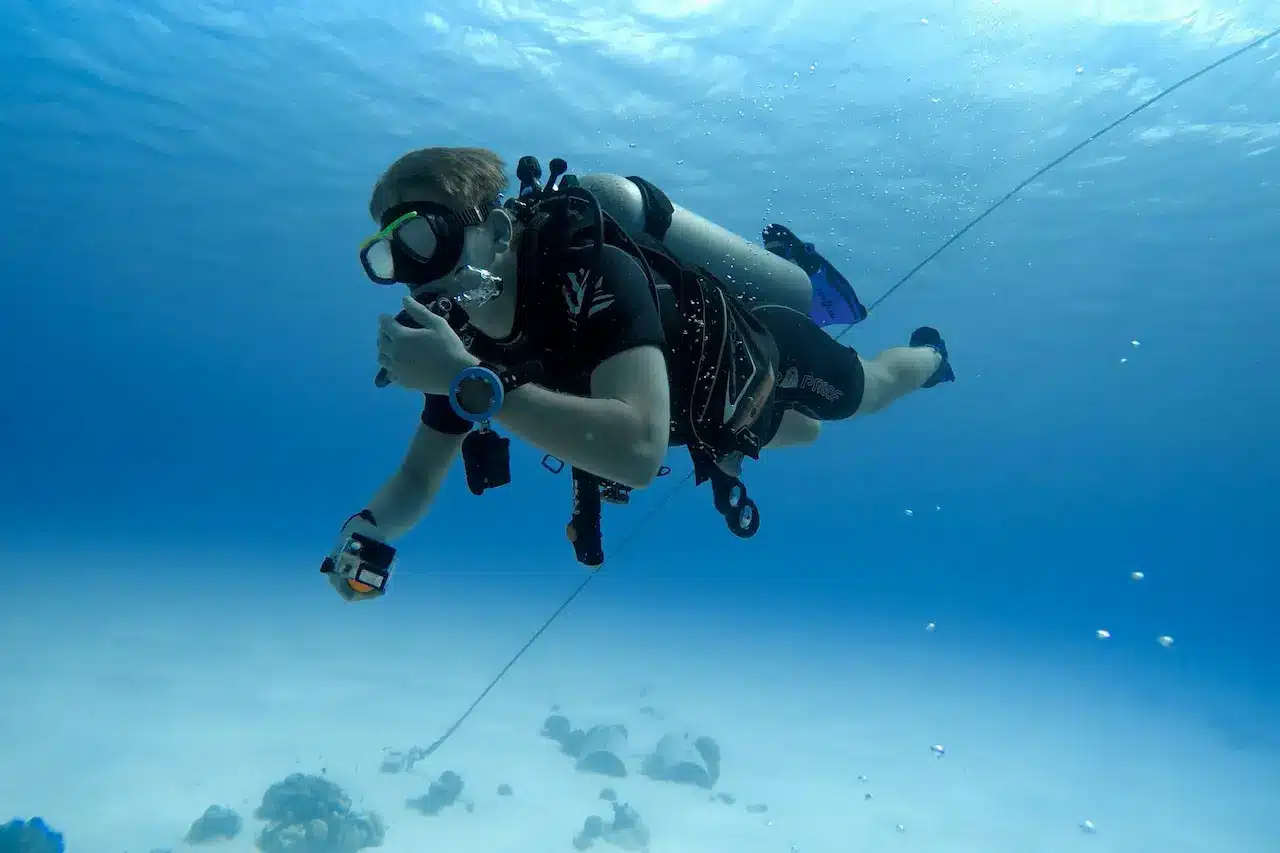
What makes Ningaloo genuinely unusual on a world scale is that it’s a fringing reef rather than a barrier reef. On the Great Barrier Reef, and on most major reef systems, the coral sits many kilometres offshore behind a lagoon, and seeing it means a boat trip of an hour or more. At Ningaloo the reef crest in places lies only a few hundred metres from the sand, occasionally closer, so you can walk in from a car park, snorkel a fin-kick or two off the beach, and be looking at plate coral, parrotfish and reef sharks within minutes. It’s the reason Ningaloo was inscribed on the UNESCO World Heritage List in 2011 — a 604,500-hectare property spanning both the marine park and Cape Range National Park, recognised for the rare contrast between an arid, rugged limestone range and one of the most accessible, biodiverse reef systems on the planet. The UNESCO listing details are worth a look before you go, if only to understand how unusual the combination of desert range and living reef really is.
The trade-off is that Ningaloo’s coral is more exposed to swell, sun and careless fins than a reef sitting behind a protective lagoon, and the Parks and Wildlife Service asks snorkellers to observe strict no-touch, no-stand etiquette that matters more here than almost anywhere else in the country. Bring reef-safe sunscreen and fins you can control.
The single biggest reason people fly into this corner of WA is to swim alongside a whale shark, and Ningaloo is one of the most reliable places on Earth to do it. The season runs roughly mid-March to August, triggered by convenient natural timing: seven to ten days after the March full moon, the reef’s coral spawns en masse, the resulting plankton bloom draws in krill, and the krill draw in the whale sharks — the largest fish in the ocean, reaching upward of ten metres, filter-feeding rather than hunting, and entirely uninterested in the snorkellers dropped in alongside them. Swims run exclusively through licensed, DBCA-regulated operators out of the Exmouth Boat Harbour: a spotter plane locates a shark, the boat repositions ahead of it, and swimmers enter in small relay groups under strict rules on numbers, distance and no-touch contact. Choose an operator on their licence and safety briefing, not on price — the rules exist because whale sharks are a protected, globally threatened species.
Bookings fill fast in the June–July peak, and weather can cancel a day’s boats with little notice, so if a whale shark swim is the reason for your trip, build in a buffer day or two rather than flying in and out on a tight window.
Whale sharks get the headlines but they’re one part of an extraordinary run of marine seasons. Humpback whales move through on their migration from roughly June through November, using the calm water inside the reef as a resting and nursing ground on the way back south with calves; in-water humpback swims now run through winter out of Exmouth, a newer addition to the whale shark trade. Manta rays are present year-round but turn up in noticeably greater numbers from May to November, congregating at cleaning stations where smaller fish pick parasites off their wings — slower and more hypnotic to snorkel alongside than a cruising whale shark. Green and loggerhead turtles nest along Ningaloo’s beaches from around November to March, and the Jurabi Turtle Centre north of town runs guided night viewing over the peak December–February window, with strict red-light-only rules to avoid disorienting nesting females. Add reef sharks, dugongs, dolphins and a huge resident fish population, and there’s something worth getting in the water for at any time of year — the calendar just changes what it is.
Behind the reef, the land does its own remarkable thing. Cape Range is a folded limestone range riddled with caves and dry gorges, rising abruptly out of the coastal plain. Yardie Creek, at the end of the sealed road roughly 90 kilometres from Exmouth, is the park’s best-known gorge — a permanent waterway cut deep into red cliffs, walkable along the rim or explored by canoe or guided boat, and one of the more reliable places to spot black-flanked rock-wallabies on the ledges. Mandu Mandu Gorge, closer to town, is a shorter, rockier walk across an old fossilised reef terrace now stranded well above sea level. On the range’s eastern side, the drive up Charles Knife Canyon and Shothole Canyon delivers some of the best lookout views on the Cape, especially in the last hour of light.
Back at sea level, the snorkelling sites inside the park are the main event. Turquoise Bay is the postcard shot of the whole region and home to the famous “drift snorkel” — you wade in at the southern end, let the current carry you north over a shallow coral garden thick with reef fish, and get out well before the sandbar, because the same current sweeps into a genuine rip further along that has caught out more than a few overconfident swimmers. Read the signage, snorkel with a buddy, and exit at the marked point, not when you feel like it. Oyster Stacks, a little further north, is only worth attempting around mid-to-high tide — at low tide the reef is exposed and walking distance to sharp coral rock, but with enough water over it, it’s one of the richest, most colourful coral gardens accessible directly from the beach anywhere in the state.
Exmouth is not big and it doesn’t pretend to be. There’s one main supermarket, a visitor centre, a scattering of tour operators and dive shops around the marina, a small clinic rather than a hospital, and long, flat distances between everything — Cape Range’s northern boundary starts around 40 kilometres from town, Yardie Creek is over 90, and Coral Bay is another 150 south again. Fuel and groceries cost noticeably more than in Perth, mobile coverage thins out fast inside the national park, and the nearest major hospital is hours away by road or Royal Flying Doctor flight, worth remembering before you go canyon-scrambling alone. None of that is a criticism — it’s the trade-off for a town this close to a reef this good.
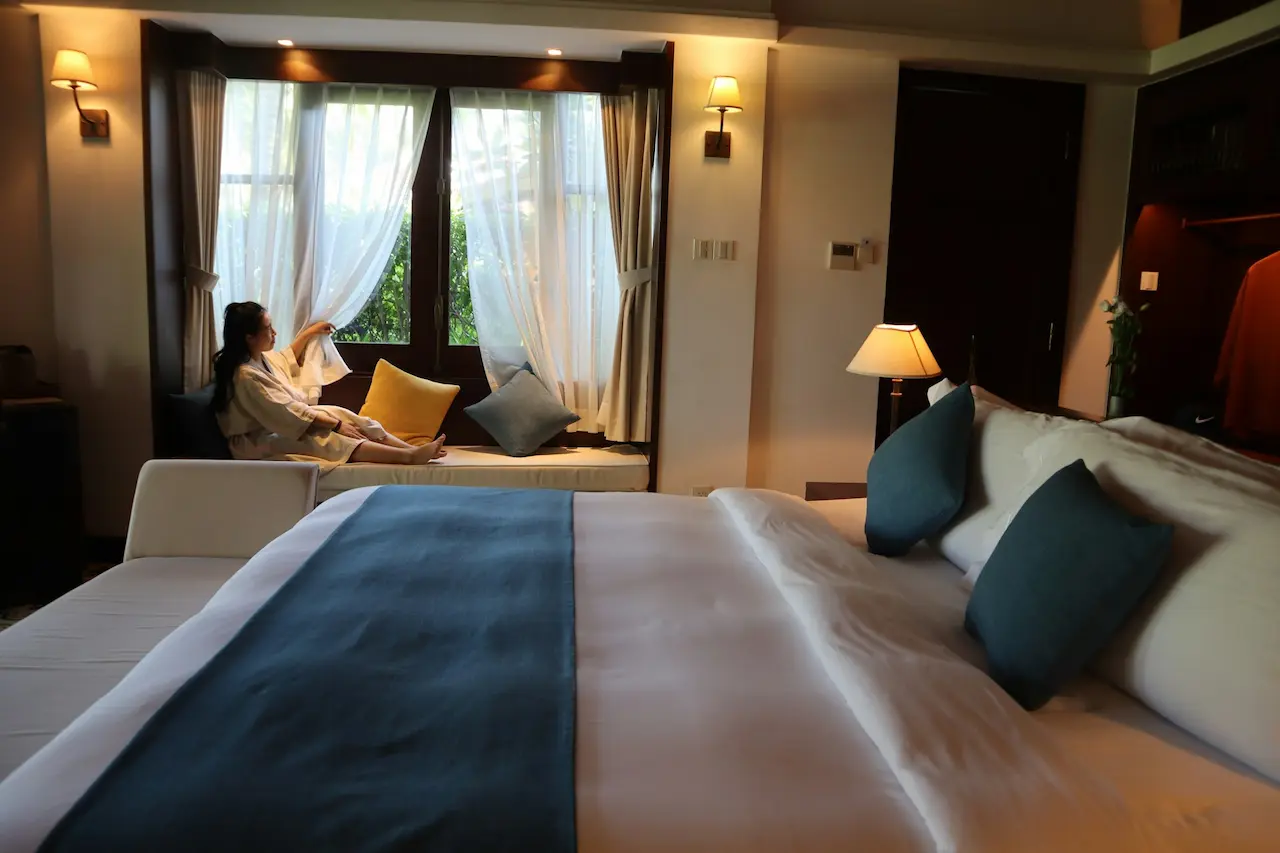
Accommodation in Exmouth runs from budget caravan parks and backpacker-style lodges through to a handful of mid-range motels and resort-style properties, with beachfront camping inside Cape Range National Park itself the standout option for anyone with the right vehicle — sites are basic (long-drop toilets, no power, often no potable water) and booked out months ahead for the June–August peak. Eating out in town is straightforward rather than flashy: a few solid pub-and-bistro options, fish and chips near the marina, a bakery for the early starts that whale shark tours demand, and a supermarket well stocked for self-catering, which most longer-stay visitors end up doing. Book accommodation before you book flights, particularly for the winter school holidays.
The easiest way in is to fly to Learmonth Airport (LEA), about 37 kilometres south of Exmouth, with direct services from Perth several times a week; a hire car or pre-booked transfer covers the last leg. Driving from Perth is a genuine road trip: 1,248 kilometres up the North West Coastal Highway and the Minilya-Exmouth Road, around 13 hours that most people spread over two or three days, commonly with a stop at Carnarvon and a detour to Monkey Mia in Shark Bay. Coming from the north, it’s a manageable day’s drive down from Karratha and the Pilbara, and Exmouth pairs naturally with Coral Bay as a two-stop reef itinerary. Whichever direction you’re coming from, fill the tank whenever you see one — the gaps between fuel stops here are long enough to matter.
The practical answer depends on what you’re chasing. Whale shark season (mid-March to roughly August) overlaps with the most comfortable weather — warm days, cooler nights, low humidity — and is by far the busiest and most expensive stretch of the year, peaking through the June–July school holidays. Outside that window, from November through April, this stretch of coast sits inside the Australian cyclone belt, and Exmouth has taken direct hits before: Severe Tropical Cyclone Vance in March 1999 produced a 267 km/h wind gust at nearby Learmonth, still the highest wind gust ever recorded on the Australian mainland, and flattened a large part of the town. Cyclones don’t arrive every wet season, but they arrive often enough that travelling to the Cape between November and April means checking the Bureau of Meteorology’s tropical cyclone outlook before you commit, and having a flexible itinerary if a system is tracking anywhere near the Gascoyne coast. For most visitors, the sensible window is April to October; the Tourism WA seasonal guides and the Cape Range National Park page are both worth checking closer to your dates for track and campsite conditions, which change after heavy rain.
Zali’s clearest memory from the trip wasn’t the whale shark, though she got her swim on day four and it delivered everything promised. It was an ordinary afternoon at Turquoise Bay, drifting the shallow coral garden for the third time that day with nothing more exotic in mind than cooling off, when a green turtle surfaced an arm’s length away, looked at her with what she swears was mild irritation, and went back to grazing on the sea grass like she wasn’t there. That’s the thing about Ningaloo that no amount of whale shark marketing quite captures: the headline animal gets you on the plane, but it’s the reef itself — close, warm, walkable, and absurdly full of life for water this shallow — that has people coming back year after year with their own snorkel gear packed before their swimmers. Exmouth doesn’t try to be more than it is. It doesn’t need to.
Live forecast from Open-Meteo. Updated each time the page loads.
Based on 30 years of weather data. Sweet spot: Jul, Aug, Sep — mild temperatures, low rainfall and plenty of sun. Avoid Jan, Feb if you can — typically the wettest or hottest stretch of the year.
Typical wave height around 0.3 m over the next two weeks. a wetsuit makes winter swims much more pleasant.
Points of interest within 25 km, pulled from OpenStreetMap. Distances are straight-line; check road access before heading out.
Real road distance and driving time to other destinations in the state. Click through for fuel estimates, suggested overnight stops, and tours along the way.